Magnetic Wireless Power Bank Wholesale: Specs, Compatibility, Safety and Shipping Checklist for Importers
Also available in: 中文 · Español · العربية · Русский · Bahasa Indonesia
The short answer
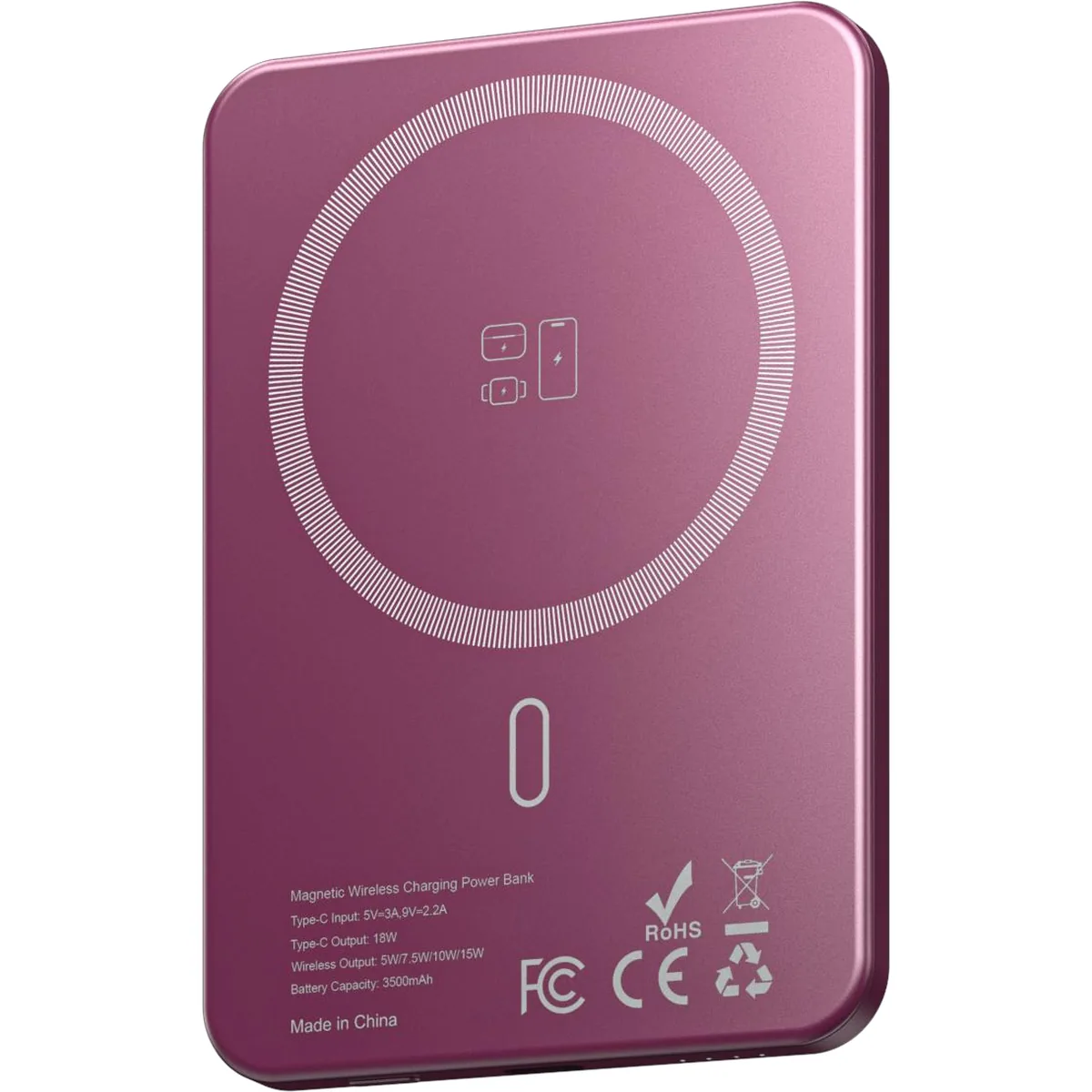
A magnetic wireless power bank snaps onto the back of a compatible phone and charges without a cable. It sells on convenience, but returns come from three places: capacity that does not match the number on the box, magnets too weak to hold, and heat. Check those three, word compatibility carefully and plan lithium shipping before you order. See our magnetic power bank range in the catalogue.
Rated capacity is not usable capacity
A 5,000 mAh pack is rated at the cell voltage (about 3.7 V), so it stores roughly 18.5 Wh. Wireless charging loses energy as heat, so expect to deliver well under the rated figure to the phone. A fair rule is 55–70% of rated capacity wirelessly, and more by cable. Write "5,000 mAh" in the listing, never "charges your phone twice" unless you have tested it.
| Rated | Approx. Wh | Realistic wireless delivery |
|---|---|---|
| 5,000 mAh | ~18.5 Wh | Roughly one phone charge, less for large phones |
| 10,000 mAh | ~37 Wh | Roughly one to two charges |
| 20,000 mAh | ~74 Wh | Roughly two to three charges; heavy to carry |
Compatibility: choose your words carefully
- Magnetic alignment works only with phones or cases that contain magnets; a thick non-magnetic case breaks the hold.
- Do not use Apple trademarks or imply Apple certification unless the factory shows a valid licence. Say "magnetic wireless charging" and list tested models instead.
- Ask which wireless power the pad delivers (watts) and whether it also charges by cable at the same time.
- Keep a compatibility table of the phones you tested, with and without a case.
Quality tests to run on your sample
- Hold test: put it on the phone and shake gently, then in a pocket for an hour.
- Heat test: charge from 20% to 80% and check the surface temperature by hand and with a thermometer.
- Capacity test: measure delivered energy with a USB meter, wired and wireless.
- Cable and pass-through: confirm input and output ports and whether the bank can charge while it charges the phone.
- Marking: check printed capacity, voltage and certification marks on the unit.
Safety and shipping
Power banks are lithium-ion batteries sent as standalone cells under UN3480, which means air freight usually needs a state of charge limit (commonly about 30%), a test summary (UN38.3) and correct labels, and the forwarder confirms what it accepts. Packs under 100 Wh are the normal range, and a 20,000 mAh pack is close to 74 Wh. See the shipping and logistics guide and the battery case vs power bank guide for the paperwork.
Bundles and positioning
- Commuter: slim pack plus a short cable.
- Travel: higher capacity plus a pouch.
- Phone-launch bundle: pair with a case that keeps the magnets working, and compare it with the battery case retail guide.
- Corporate gifts: add your logo through OEM services.
Order the smart way
Order one sample, run the tests above, then price the bundle with landed cost and margin. Read why sample orders matter first. MOQ and pricing are shown on the product page.
Frequently asked questions
Is it compatible with every phone?
No. It holds with magnetic phones or cases; other phones may need a magnetic ring.
How long does a charge take?
Wireless is slower than a cable and depends on the watts delivered and the phone.
Can I send it by air?
Usually yes, as UN3480 with limited charge and the right documents; confirm with your forwarder.